
Co-funded by Aqua for All and supported by YY Ventures, the program offers intensive training on water, sanitation, and hygiene (WASH) issues, equipping early-stage entrepreneurs with the knowledge and tools they need for their businesses to succeed and sustain.
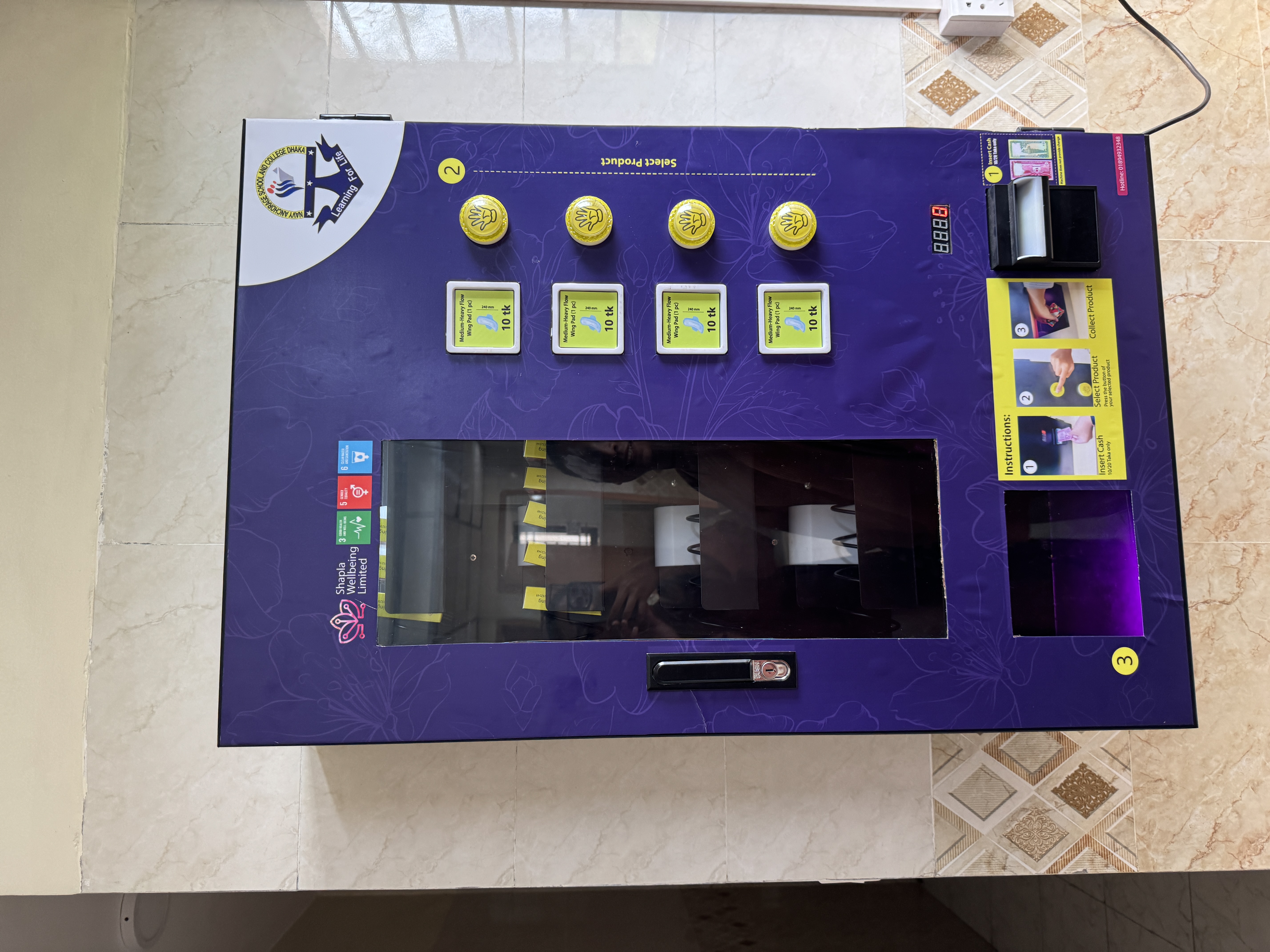
For many women in Bangladesh, managing menstrual health emergencies remains a daunting challenge. This was a reality that hit close to home for Bushra E Anjum, co-founder of Shapla Wellbeing, during an outing in Dhaka. Forced to travel four kilometers just to access basic menstrual supplies, she realized the glaring gap in health and hygiene accessibility.
For Bushra,, this experience underscored the lack of immediate access to essential products and the unspoken challenges women face when managing health emergencies. Determined to create a solution, she founded Shapla Wellbeing in 2019 to address this pervasive issue head-on.
Since then, Shapla Wellbeing has been a game-changer for menstrual health in Bangladesh, providing innovative access to hygiene products and education while empowering women economically. Through its Smart Vending Machines (SVMs), awareness programs, and technical training initiatives, Shapla is redefining how women manage their health with dignity and convenience.
Transformative Impact
Shapla Wellbeing’s innovative approach revolves around Smart Vending Machines (SVMs) strategically placed in high traffic areas, schools, workplaces, and community hubs. These machines provide menstrual hygiene products, basic medication, and other health essentials, breaking barriers to access. Since its inception, the organization has installed 14 vending machines in Dhaka and Chattogram, with over 4,050 women and girls regularly using these services.
“This has been one of the most valuable additions to our school,” said the Vice Principal of BAF Shaheen College Chattogram. “Girls no longer need to leave school during their periods. They feel confident staying engaged in their studies.”
The initiative also extends to underserved communities, offering affordable menstrual products priced to fit within the budgets of low-income households. In 2024 alone, Shapla sold 5,900 sanitary pads, generating over BDT750,000 in revenue — all reinvested to fuel expansion.
Breaking Taboos Through Education
Beyond product accessibility, Shapla focuses on breaking the stigma around menstruation. Its workshops and awareness campaigns have reached over 5,500 individuals, including adolescent boys and girls. These sessions foster open discussions about menstrual health, equipping participants with knowledge to challenge cultural taboos.
“Having access to affordable pads at school has reduced the stress of emergencies and removed a lot of hassle I used to face,” shared an eighth-grader at Navy Anchorage School and College. Her classmate echoed similar sentiments: “The vending machine has made handling periods at school much easier. I feel more at ease talking about it now.”
Empowering Women Economically
Shapla Wellbeing’s impact extends to economic empowerment. The organization provides technical training for women to manage and operate vending machines, creating income opportunities and fostering independence. This initiative supports women to not only manage their own health but also contribute to their communities’ well-being.
“The workshops encouraged students to be more open, and it reduced the stigma,” said Sabina Yasmin, Acting Vice Principal of Navy Anchorage School and College. “We hope to add another vending machine so more students can benefit.”
Future Vision
As demand grows, Shapla Wellbeing is working to expand its network of vending machines and increase the scale of its educational programs. With interest from prominent institutions and development organizations, the enterprise is poised to deepen its impact, making menstrual health resources universally accessible.
Through its multifaceted approach, Shapla Wellbeing exemplifies how social enterprises can drive change. By addressing immediate needs and promoting long-term empowerment, Shapla is not only transforming the narrative around menstrual health in Bangladesh but also building a foundation for gender equity and dignity.