
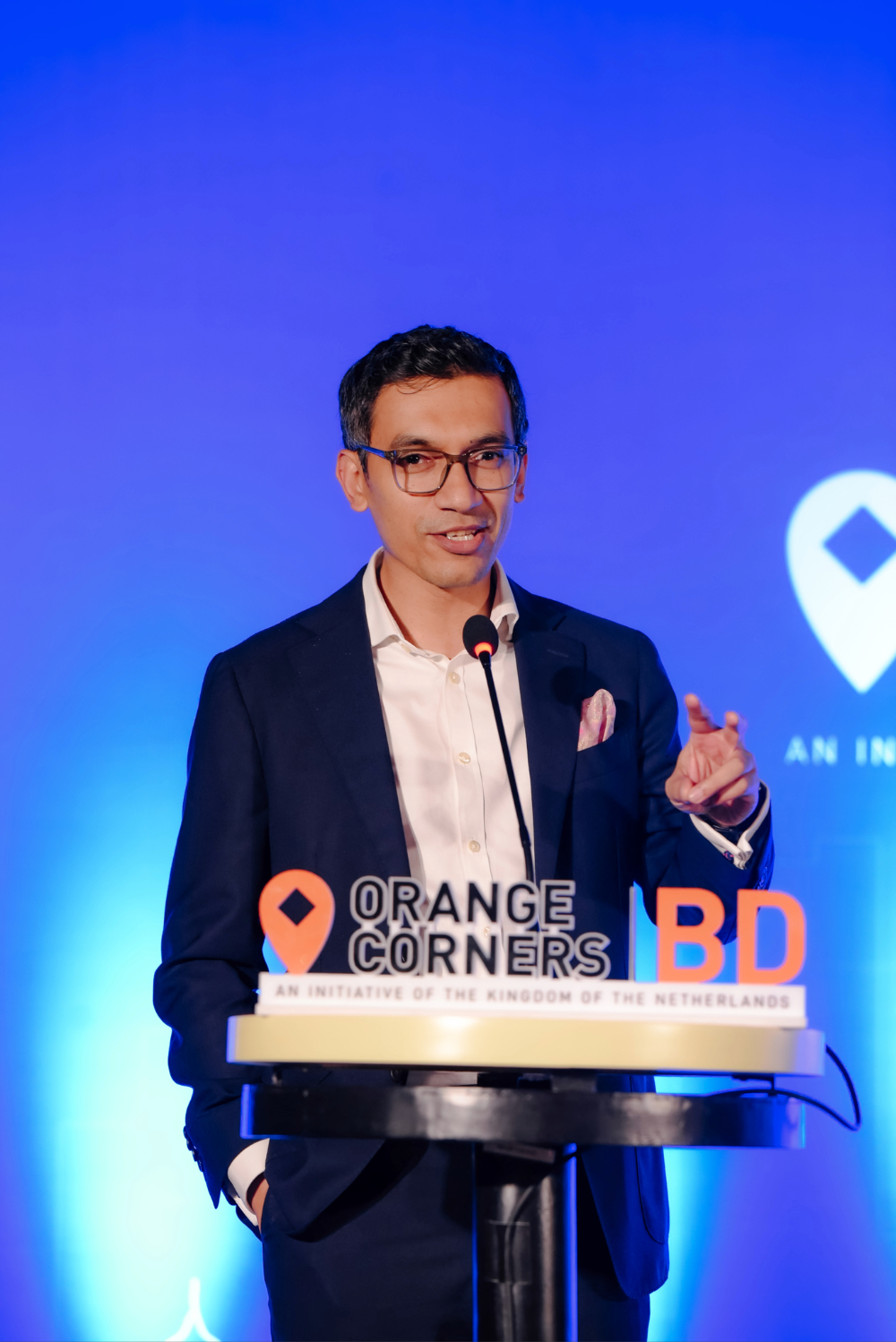
That is exactly what Orange Corners Bangladesh has been doing since 2023, and what it will continue doing for the next three years. At a high-level event hosted by YY Ventures in January 2026, entrepreneurs, policymakers, investors, and private sector leaders came together to mark a milestone: the confirmed continuation of Orange Corners Bangladesh, with YY Ventures leading the programme through its next phase. The energy in the room reflected something beyond routine renewal. It reflected a shared conviction that this programme is working, and that the work ahead matters.
More Than a Programme
Since its launch, Orange Corners Bangladesh has supported more than 70 early-stage enterprises across agriculture, ICT, circular economy, health, and education. Behind those numbers are founders who have built businesses from pilot kitchens to nationwide operations, social enterprises supporting hundreds of women across communities, and young people who have chosen entrepreneurship as a serious career path because they saw what was possible.
Shadman, CEO of Saus Taus, described how structured support from Orange Corners helped him scale from a small pilot kitchen to serving over 100,000 customers across the country. Tania Naznin, Founder of Tanis Bangladesh, spoke about how mentorship and peer exposure helped her refine her strategy and expand her social enterprise, which now supports more than 300 women. These are not outliers. They are the programme doing what it was designed to do.
The Trust That Makes It Work
None of this happens without trust. And trust, in an ecosystem context, has to be earned from multiple directions at once: from entrepreneurs who are betting their ideas on your support, from private sector partners who are committing time and resources, from government who must see the value in collaboration, and from international funders who expect results.
H.E. Jorris Van Bommel, Ambassador of the Kingdom of the Netherlands to Bangladesh, captured this well at the event: "This is not only an investment in individual entrepreneurs. It is an investment in the broader entrepreneurial ecosystem." YY Ventures has built that trust steadily, and it shows in who shows up. Corporates, policymakers, investors, and programme alumni all gathered not because they were required to, but because Orange Corners has become a platform they believe in. Osman Dhali, COO of YY Ventures, put it plainly: "Entrepreneurs cannot grow in isolation. They grow through collaboration. Orange Corners brings everyone into one ecosystem, under one trusted platform."
What the Next Three Years Look Like
The next phase of Orange Corners Bangladesh is sharper and more intentional. Building on what has worked, the programme will deepen its sector focus with dedicated cohorts in agriculture, port and maritime, and water. These are not arbitrary choices. They reflect where Bangladesh's economic potential is greatest, where innovation is most needed, and where entrepreneurial solutions can create the most systemic change. For the first time, a full cohort will concentrate entirely on agriculture, reflecting both the sector's national importance and its significant untapped potential. ICT and digitalization will continue as cross-cutting enablers across all sectors, helping founders refine their models, reach new markets, and scale with confidence.
The programme will also expand its geographic reach, moving beyond Dhaka to support founders from across the country. An ecosystem that only reflects the capital is not a national ecosystem. Orange Corners Bangladesh is committed to changing that.
Investment Readiness, Inclusion, and Advocacy
Three priorities will define the character of the next phase. The first is investment readiness. Orange Corners Bangladesh will work deliberately to prepare entrepreneurs for the funding conversations they need to have, building the financial fluency, documentation, and investor relationships that translate good businesses into fundable ones.
The second is inclusion. More than 60% of supported enterprises are already women-led or have women in leadership roles. That is not a coincidence. It is a result of deliberate design, and the programme will continue to ensure that opportunity is not concentrated in the hands of the few.
The third is advocacy. Shamima Akhter, Director of Corporate Affairs, Partnerships, and Communications at Unilever Bangladesh, was direct about what entrepreneurs actually need: "Entrepreneurs do not just need cheques. They need guidance, access, and honest feedback to grow sustainably." Private sector partners in the programme have embraced this fully, contributing mentorship, market access, and operational expertise alongside funding.
On the policy side, Ashik Chowdhury, Executive Chairman of BIDA and BEZA, highlighted government initiatives such as the Startup Pack, which simplifies business registration and compliance, helping founders navigate regulatory hurdles that would otherwise slow them down. Systemic change requires public sector commitment, and that commitment was visible at the event.
PR Coverage: The Business Standard